May 29, 2013

Grain Challenge -June: Sorghum

**Info from Whole Grains Council
June's Grain of the Month is Sorghum. Ask a hundred people if they've ever eaten sorghum and chances are, they'll have no idea what you’re talking about. However, sorghum, a cereal grain, is the fifth most important cereal crop in the world, largely because of its natural drought tolerance and versatility as food, feed and fuel. In Africa and parts of Asia, sorghum is primarily a human food product, while in the United States it is used mainly for livestock feed and in a growing number of ethanol plants. However, the United States also has seen food usage on the rise, thanks to the gluten-free benefits of sorghum for those with celiac disease.

OUT OF AFRICA

Sorghum [Sorghum bicolor (L.) Moench] is known under a great many names: miloguinea corn in West Africa, kafir corn in South Africa, dura in Sudan, mtama in eastern Africa, jowar in India and kaoliang in China. It is an ancient cereal grain and was collected 8000 years ago in Southern Egypt. But today different varieties of sorghum are grown all over the world. The kernels vary in color from white and pale yellow to deep reds, purples and browns; white, bronze, and brown kernels are most common. 

White Sorghum Grains
This is white sorghum, the kind most commonly consumed in Western countries.
Dark Sorghum Grains
Sorghum comes in many varieties, ranging in color from ivory to bronze to reddish-black. Darker colored sorghums generally have a more pronounced flavor.
A Variety of Sorghums
Sorghum kernels grow in seed heads like those shown here.
Sorghum Growing in a Field
You may actually have seen sorghum growing in a field, but assumed it was corn because of the close resemblance (to the unknowing eye!).
Popped Sorghum
Just as with popcorn, the moisture in sorghum kernels can swell when heated, making the kernel pop into a tasty snack.
Sorghum Flour
Just like all the other grains we've featured here on the WGC site, sorghum flour just looks like plain old flour. Perhaps that will encourage you to try substituting some for the "normal" flour in your favorite recipes.

Increased prevalence and diagnosis of celiac disease have led to strong growth in the gluten-free market, of which sorghum is a key component. While 40,000 to 60,000 Americans have been diagnosed as celiac, the federal government estimates there could be as many as 3 million undiagnosed. A gluten-free diet incorporating sorghum also has been adopted by many with autism, ADHD and irritable bowel syndrome, although research in this area is limited.
But being gluten-free isn’t sorghum’s only bragging right. It’s also a whole grain that provides many other nutritional benefits. Sorghum, which doesn't have an inedible hull like some other grains, is commonly eaten with all its outer layers, thereby retaining the majority of its nutrients.  Sorghum also is grown from traditional hybrid seeds and does not contain traits gained through biotechnology, making it nontransgenic (non-GMO).
Some specialty sorghums are high in antioxidants, which are believed to help lower the risk of cancer, diabetes, heart disease and some neurological diseases. In addition, the wax surrounding the sorghum grain contains compounds called policosanols, that may have an impact on human cardiac health. Some researchers, in fact, believe that policosanols have cholesterol-lowering potency comparable to that of statins.

SO EASY TO USE

Sorghum can be substituted for wheat flour in a variety of baked goods. Its neutral, sometimes sweet, flavor and light color make it easily adaptable to a variety of dishes. Sorghum improves the texture of recipes and digests more slowly with a lower glycemic index, so it sticks with you a bit longer than other flours or flour substitutes.
A wide variety of recipes using sorghum can be found online and in cookbooks, particularly those catering to a gluten-free diet. These recipes include muffins, breads, pizzas, pastas, casseroles, cookies, cakes, pies and more.To get you started, here are links to some sorghum recipes on the Whole Grains Council website:
You can also substitute sorghum in your existing recipes. Start with recipes that use relatively small amounts of wheat flour, such as brownies or pancakes. Substituting sorghum takes some experimenting and patience, but the results can be very delicious. Because sorghum flour does not contain gluten, bakers often incorporate a binder such as xanthan gum or cornstarch to add “stretch.” 
For instance, you could add 1/2 teaspoon xanthan gum per cup of sorghum flour for cookies and cakes, and 1 teaspoon per cup for breads.
While it's easy to make familiar Western dishes with sorghum, like those above, it's also interesting to know how sorghum fits into food traditions in other parts of the world. In the Mideast, sorghum is made into cous-cous and flatbread; in Bangladesh it's boiled like rice, to produce kichuri; and in Honduras, sorghum tortillas are common.
Throughout Africa, you'll find sorghum porridge or gruel in almost every country, and sorghum flatbreads such as injera , the Ethiopian flatbread (which is made from sorghum or teff or a combination of both). Both alcoholic and non-alcoholic beverages are also made from sorghum. Most of these products start with fermented or sprouted sorghum, as these two processes make sorghum's nutrients more available, while increasing shelf life for greater food safety.

Apple Wild Rice

This is my favorite rice to eat with salmon!

1 c. wild rice
3 c. water
1/2 c dried apple pieces (I buy bulk from Church cannery for food storage and crumble them some)
1 T soy sauce (or liquid aminos; or neither if you don't have it on hand)
1/2 onion, chopped in pieces
1 T oil/butter
salt to taste

1. sautee the onions in oil or butter until translucent
2. add rice, water and apple pieces and bring to boil; simmer 45 minutes (or until rice is fully cooked)
3. remove from heat and if desired, add soy sauce and salt and mix those in well.

I like to let mine sit for a few minutes with the lid on, but that isn't necessary. And it's great just served with a piece of plain salmon (or soy/teriyaki flavored) and a side vegetable like green beans. Also, I love the large chunks of onion it it...that to me makes this. However, you could probably get away with onion powder if you don't have the real onion (I'd say it was a tragedy if you did that--but hey, I'm not in your kitchen).

*I think I got the original idea from some recipe in the Costco magazine, but I changed a few things and added soy sauce. And of course, I love playing around with flavored rices, so....hopefully I will have more fun variations to share later.

May 8, 2013

Grain Challenge - May: Amaranth


**info from whole grain coucil
Amaranth is the common name for more than 60 different species of amaranthus, which are usually very tall plants with broad green leaves and impressively bright purple, red, or gold flowers.  The name for amaranth comes from the Greek amarantos, “one that does not wither," or “the never-fading.”  Although several species can be viewed as little more than annoying weeds, people around the world value amaranth as leaf vegetables, cereals, and ornamental plants.
It isn’t a true cereal grain in the sense that oats, wheat, sorghum, and most other grains are.  “True cereals” all stem from the Poaceae family of plants, while amaranth (among others) is often referred to as a pseudo-cereal, meaning it belongs to a different plant species.  So why are these interlopers almost always included in the whole grain roundup?  Because their overall nutrient profile is similar to that of cereals, and more importantly, pseudocereals like amaranth have been utilized in traditional diets spanning thousands of years in much the same way as the “true cereals” have been.  
Amaranth grain has a long and colorful history in Mexico and is considered a native crop in Peru.  It was a major food crop of the Aztecs, and some have estimated amaranth was domesticated between 6,000 and 8,000 years ago.  Annual grain tributes of amaranth to the Aztec emperor were roughly equal to corn tributes.  The Aztecs didn’t just grow and eat amaranth, they also used the grains as part of their religious practices.  Many ceremonies would include the creation of a deity’s image that had been made from a combination of amaranth grains and honey.  Once formed, the images were worshipped before being broken into pieces and distributed for people to eat.  When Cortez and his Spaniards landed in the New World in the sixteenth century, they immediately began fervent and often forceful attempts to convert the Aztecs to Christianity.  One of their first moves?  Outlaw foods involved in “heathen” festivals and religious ceremonies, amaranth included.  Although severe punishment was handed to anyone found growing or possessing amaranth, complete eradication of this culturally important, fast-growing, and very prevalent plant proved to be impossible.
Amaranth Growing in a Field
Amaranth plants in full flower offer up flowers in a vibrant range of reds, oranges, purples, and golds. 
 Amaranth Ready for Harvest
Orange amaranth flowers that have been harvested and allowed to dry, making it easier to harvest the amaranth grains. 
Amaranth Grains
Once harvested, tiny amaranth grains are revealed to be a nearly uniform shade of pale cream. Some grains are occasionally darker, ranging from light brown to nearly black in color, so if you see dark specks in your bulk amaranth don’t worry. It’s just a few grains of a darker shade than normal.
Amaranth Grains in Detail
To show you just how tiny amaranth grains are, the WGC got up close and personal for this photo. Each individual grain is so small, it only covers the space of a few ridges of an average person’s fingerprint, about one millimeter. 
Popped Amaranth
Sometimes referred to as puffed amaranth, here’s what happens when you pour a few tablespoons of amaranth grains onto a very hot surface – they pop! They may not be as robust as other popped grains, but what these little puffs lack in size, they more than make up for with enthusiasm and can leap right out of a four-quart sauce pan while popping!
Amaranth Flour
We know, it's white and powdery... It could be any type of flour! But trust us on this one, it's ama

AMARANTH’S HEALTH BENEFITS

Amaranth contains more than three times the average amount of calcium and is also high in iron, magnesium, phosphorus, and potassium.  It’s also the only grain documented to contain Vitamin C.  Very little research has been conducted on amaranth’s beneficial properties, but the studies that have focused on amaranth’s role in a healthy diet have revealed three very important reasons to add it to your diet.
It’s a protein powerhouse.  At about 13-14%, it easily trumps the protein content of most other grains.  You may hear the protein in amaranth referred to as “complete” because it contains lysine, an amino acid missing or negligible in many grains.  
It’s good for your heart.  Amaranth has shown potential as a cholesterol-lowing whole grain in several studies conducted over the past 14 years. 
Last but not least, it’s naturally gluten-free.  Gluten is the major protein in many grains and is responsible for the elasticity in dough, allows for leavening, and contributes chewiness to baked products.  But more and more people are finding they cannot comfortably – or even safely – eat products containing gluten, often due to Celiac disease, an autoimmune digestive disease that damages the body’s ability to absorb nutrients from food.  This makes amaranth an important grain to take note of during May, which is Celiac Awareness Month.

AFTER ALL, AMARANTH IS MADE FOR EATING!


In many South American countries, you can find it sold on the streets, most often having been popped like corn.  In India, Mexico, Nepal, and Peru, it’s a traditional ingredient for breakfast porridge.  In Mexico, a favorite treat is dulce de alegria (“alegria” is the Spanish word for joy), a sweet candy-like confection made from popped amaranth mixed with sugar or honey.  And of course, amaranth can be eaten straight up.  Its flavor runs from light and nutty to lively and peppery, making it a popular ingredient in cereals, breads, muffins, crackers, and pancakes.
Cooking amaranth is very easy – measure grains and water, boil water, add grains, gently boil with the occasional stir for 15-20 minutes, then drain, rinse, and enjoy!   It never loses its crunch completely, but rather softens on the inside while maintaining enough outer integrity so that the grains seem to pop between your teeth.  None of our culinary experts reported any success when trying to prepare amaranth for a pilaf, but the cooked grains can be spread on a plate or other flat surface to dry a bit, then sprinkled on salads, added to cookie batters, or stirred into soups.
We suggest at least 6 cups of water for every one cup of amaranth, not because the little grains will absorb that much liquid, but because of what happens to the water that’s left.  To say “your cooking liquid will thicken slightly” is putting it delicately.  Our experiments with the average amount of liquid (about 2 cups) left us with about two inches of excess water that was goopy and viscous, in part due to starch being released by amaranth as it cooks.  The grains hadn’t gone bad or anything, and they were fine after a brief rinse in a fine-mesh strainer, but it was a bit of a surprise.

Apr 22, 2013

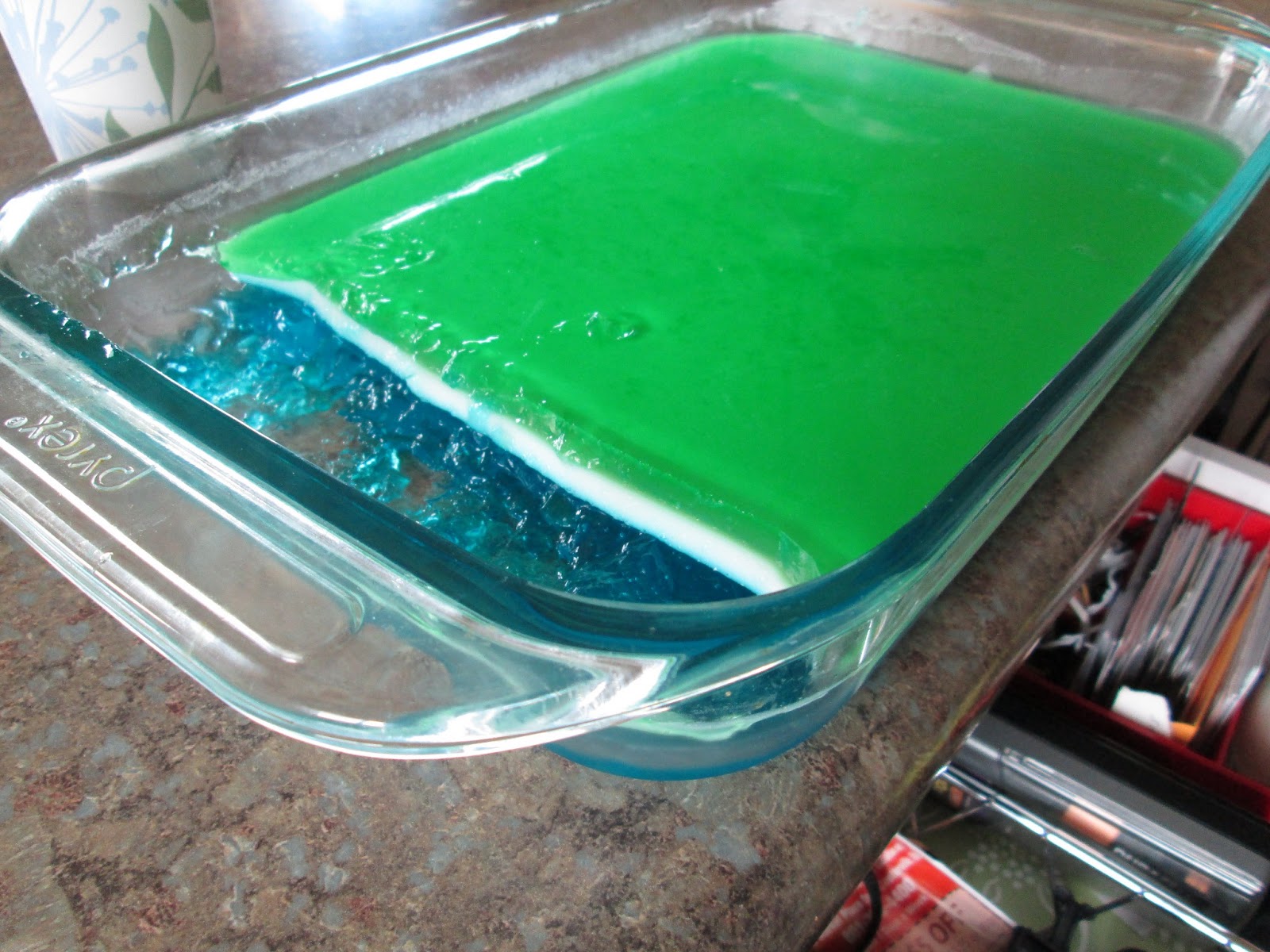
Coconut Jello

Want a healthier version of jello? I think mom made this up, because he fascination with gelatin. If you can, get organic/grass-fed gelatin. But if not...enjoy this recipe either way!
This is my Earth Day Jello: coconut milk middle layer with mixed berry and lime on bottom and top.

1 c coconut milk
1 packet gelatin, dissolved in 1/4 cup boiling water
2 drops liquid stevia (optional...but I don't use it when I layer with other sweet jellos)

Mix all and set in fridge for 4 hours. :)

Apr 1, 2013

Grain Challenge - Sprouted Grains: April


Historically, many of our grains sprouted accidentally, a happenstance that modern techniques have largely eradicated. Now, however, we're learning that we may be missing out by turning our back on sprouting; new techniques of controlled sprouting give us the best of the past, for better health.

WHAT IS A SPROUTED GRAIN?

Grains are the seeds of certain plants, largely cereal grasses. Like all seeds, grain kernels are a marvel of nature, containing the potential of a whole new plant, patiently waiting its turn in the sun.

All three edible parts of the whole grain – the germ, endosperm, and bran – are crucial to creating the new plant. The germ is the plant embryo, which, when it grows, will feed on the starchy endosperm. The bran layers provide some additional nutrients and — along with the inedible husk found on many grains – help protect the grain seed until it’s ready to start the growth cycle.

Until then, the seed counts on certain built-in growth inhibitors to keep it from germinating until temperature and moisture conditions are just right. Then, once sprouting starts, enzyme activity wipes out these growth inhibitors and transforms the long-term-storage starch of the endosperm to simpler molecules that are easily digested by the growing plant embryo.

Just as the baby plant finds these enzyme-activated simple molecules easier to digest, so too may some people. Proponents of sprouted grains claim that grains that have just begun sprouting – those that are straddling the line between a seed and a new plant, as shown here — offer all the goodness of whole grains, while being more readily digested.
What’s more, the sprouting process apparently increases the amount and bio-availability of some vitamins (notably Vitamin C) and minerals, making sprouted grains a potential nutrition powerhouse.
There is at this time no regulated definition of 'sprouted grain.'  Consumers who want to understand what they are eating, and companies who are considering manufacturing or marketing sprouted grains may find it useful to review and compare existing industry definitions. Click here to see how AACCI and various manufacturers define sprouted grains.

CONTROLLED SPROUTING FOR MAXIMUM BENEFITS

Until about a hundred years ago, humans harvested their grains, tied them into sheaves, and left them in the field until they were ready to thresh the grain. Inevitably, with this exposure to the weather, at least some of the grain would begin to sprout.

Rice Germinating EquipmentRice Germinating EquipmentWhile a little sprouting appears to be good for us, there’s a sweet spot. Just the right amount of time, temperature, and moisture are necessary to start the germination process. Too much moisture, and the grain drowns, with the seed splitting open not from the force of an emerging, vibrant seedling but instead, simply from waterlogged swelling. Or, the sprout may begin to emerge but then, if the moisture source is not removed, it can begin to ferment or even to rot.  Time is important too: if a healthy sprout continues to grow indefinitely, it becomes a new grass stalk, losing its digestibility, since humans can’t properly digest grasses.

Fortunately, companies marketing sprouted grains today don’t simply leave their grains randomly in the field. They sprout their grains under carefully-controlled conditions, with just the right amount of moisture and warmth, until the important enzymatic processes are at their peak, and then they use the sprouted grains to make products.

DRY OR WET?

Companies making sprouted grain products currently use two different approaches – dry and wet – once the grains are sprouted.

The Dry Approach. Some companies sprout the grain then dry it , to lock in this ideal stage. At this point, the sprouted grain can be stored until it’s cooked as a side dish, or it can be milled into sprouted grain flour, which is in turn used to make a wide variety of products.

The Wet Approach. Alternately, other companies mash the wet, sprouted grains into a thick purée which is used to make breads, tortillas, muffins and other products. These products are often described as “flourless” and are frequently sold frozen.

HEALTH BENEFITS OF SPROUTED WHOLE GRAINS

Sprouting grains increases many of the grains' key nutrients, including B vitamins, vitamin C, folate, fiber, and essential amino acids often lacking in grains, such as lysine. Sprouted grains may also be less allergenic to those with grain protein sensitivities.
The pace of research is quickening, with studies documenting a wide range of health benefits for different sprouted grains. Here are just a few:
  • Sprouted brown rice fights diabetes.
  • Sprouted buckwheat protects against fatty liver disease.
  • Cardiovascular risk reduced by sprouted brown rice. 
  • Sprouted brown rice decreases depression and fatigue in nursing mothers.
  • Decreased blood pressure linked to sprouted barley.

COOKING AND ENJOYING SPROUTED GRAINS

There are three main ways to enjoy sprouted grains: You can buy packaged sprouted grains, cook sprouted grains as side dishes, or bake with sprouted grain flours.

Mar 17, 2013

Grain Challenge - March: Quinoa


March's Grain of the Month is Quinoa. High in the Andes, the quinoa harvest starts in late March, when farmers gather together for celebrations like the two-day Harvest Festival near the salt flats of Uyuni – a gathering of representatives from 4,000 family farms. By celebrating quinoa in March, we're honoring these timeless traditions, with information about this unique "mother grain."

Quinoa is March's Grain of the Month

QUINOA AT A GLANCE

"While no single food can supply all the essential life sustaining nutrients, quinoa comes as close as any other in the plant or animal kingdom."
That was the pronouncement of researcher Philip White, in an obscure 1955 article on "Edible Seed Products of the Andes Mountains." While very few people may have read White's original article, in the last few years his words have been repeated on countless websites and in articles in newspapers and magazines, as quinoa has been rediscovered.
Quinoa (Chenopodium quinoa, or goosefoot) is in fact not technically a cereal grain at all, but is instead what we call a "pseudo-cereal" – our name for foods that are cooked and eaten like grains and have a similar nutrient profile. Botanically, quinoa is related to beets, chard and spinach, and in fact the leaves can be eaten as well as the grains. It's a testimonial to how far quinoa has come in the last five years, that most people now know it's pronounced KEEN-wah, not kwin-OH-a.
Kañiwa (Chenopodium pallidicaule, also in the goosefoot family) is a cousin of quinoa. Unlike quinoa, kañiwa (pronounced kah-nyee-wah) is not coated in bitter saponins that must first be rinsed away. 
Quinoa grows on magenta stalks three to nine feet tall, with large seedheads that can be almost any color, from red, purple and orange to green, black or yellow. The seedheads are prolific: a half pound of seed can plant a full acre, yielding 1200-2000 pounds of new seeds per acre. Since nutrient-rich quinoa is also drought resistant, and grows well on poor soils without irrigation or fertilizer, it's been designated a "super crop" by the United Nations, for its potential to feed the hungry poor of the world. 
Over 120 different varieties of quinoa are known, but the most commonly cultivated and commercialized are white (sometimes known as yellow or ivory) quinoa, red quinoa, and black quinoa. Quinoa flakes and quinoa flour are increasingly available, usually at health food stores.  
Sacred to the Incas, quinoa was referred to by them as chisaya mama, or the mother of all grains. Legend has it that each year, the Incan emperor would sow the first quinoa seeds, with much solemn ceremony. Although it's estimated that Bolivians in the Lake Titicaca area began to cultivate quinoa at least five thousand years ago, quinoa came close to disappearing after 1532. That's when Francisco Pizarro, the Spanish explorer, destroyed the quinoa fields to undermine the Incan culture, built as it was on ceremonies that almost all involved quinoa. Only small pockets of wild quinoa at high altitudes survived, and quinoa was largely forgotten until its "rediscovery" by the outside world in the 1970s.
Today, an amazing range of products are made with quinoa, from breakfast cereals to beverages. Quinoa pasta is popular among those following a gluten-free diet, and the grain is a favorite ingredient in granolas, breads, and crackers. Home bakers can try "ancient grain" blends or cook with quinoa flakes and flours. In the restaurant world, the National Restaurant Association named quinoa as the hottest trend in side dishes in its 2010 "What's Hot" survey of chefs. And the ultimate: we were even served up with quinoa shampoo at a major hotel chain not long ago!
Although scores of varieties of quinoa exist in the Andes, three are most widely cultivated and available: white, red, and black.  This illustrated list will help you recognize them.
Quinoa Plants Growing in the Field
This is what quinoa plants look like, growing in the high altitudes of mountainous regions.
Quinoa or White QuinoaQuinoa or White Quinoa
This is the most common kind of quinoa available in stores, so you'll often see it just called quinoa. Sometimes it's also called ivory quinoa.
Red Quinoa
Red Quinoa
Cooks report that red quinoa holds its shape after cooking a bit better than white quinoa, making it more suitable for cold salads or other recipes where a distinct grain is especially desirable.
Black Quinoa
Black Quinoa
A bit earthier and sweeter than white quinoa, black quinoa keeps its striking black color when cooked.
Quinoa Flakes
Quinoa Flakes
As with rolled oats or barley flakes, quinoa flakes are created by steam-rolling the whole grain kernel. Flaked grains always cook faster than whole kernels (groats) but since quinoa is already a quick-cooking grain, these flakes make a great instant breakfast.
Quinoa Flour
Quinoa Flour
Okay, all flours look pretty similar, so you'll have to trust us – this is quinoa flour.

HEALTH BENEFITS OF QUINOA

Quinoa is known as an "ancient grain," but to most scientific researchers, it's a new kid on the block. While the existing research on quinoa pales next to well-studied grains like oats or barley, the pace of quinoa research is picking up, and presenting some intriguing preliminary data.
  • Quinoa is a more nutritious option for gluten free diets.
  • Quinoa may be useful in reducing the risk for diabetes.
  • Quinoa helps you feel fuller longer.
It's not surprising that quinoa supports good health, as it's one of the only plant foods that's a complete protein, offering all the essential amino acids in a healthy balance. Not only is the protein complete, but quinoa grains have an usually high ratio of protein to carbohydrate, since the germ makes up about 60% of the grain. (For comparison, wheat germ comprises less than 3% of a wheat kernel.) Quinoa is also highest of all the whole grains in potassium, which helps control blood pressure.
What's more, quinoa is gluten free, which makes it extremely useful to the celiac community and to others who may be sensitive to more common grains such as wheat – or even to all grains in the grass family.

COOKING TIPS AND RECIPES FOR QUINOA

Quinoa has quickly become a favorite of whole grain cooks, because its tiny grains are ready to eat in just 15 minutes!  You can tell when it's done, because you'll see that little white tail– the germ of the kernel – sticking out. Like couscous, quinoa benefits from a quick fluff with a fork just before serving.
Quinoa has a subtle nutty taste that marries well with all kinds of ingredients. But make sure you rinse it well before cooking: quinoa grows with a bitter coating, called saponin, that fends off pests and makes quinoa easy to grow without chemical pesticides. While most quinoa sold today has had this bitter coating removed, an extra rinse is a good idea to remove any residue.
Cooks can choose from ivory, red, or black quinoa; from sprouted quinoa; from Arzu (a blend of buckwheat, quinoa, beans, and spices); or from quinoa flakes or flour, as a starting point for cooking.

Feb 19, 2013

Replacing Refined Sugars with Natural Sugars One Step At a Time


I decided last year to stop buying white sugar. Why? Well, I'm not the greatest cook yet, so I'm trying new recipes regularly; but I found that it was too easy for me to use white sugar in things instead of finding substitutes...because I had it on hand. So when I ran out of it one day last year, I decided that was my last day to have it in my house...at least for an experiment. 
It has now been about nine months that we have been white-sugar-free in our house. 

Do you want to take the challenge? You don't have to go cold turkey, but here is some info to help you make the switch from white sugar to better alternatives.


This is an article from westonaprice.com, and for more details on which sweeteners to choose, see our post about your options

Replacing Refined Sugars with Natural Sugars One Step At a Time
PDFPrintE-mail
The average American now consumes 175 pounds of sugar per year! That's 46 teaspoons a day! If we pretend that sugar actually had some benefits, eating one-half pound every day would not seem like such a bad idea. But the truth is that sugar has absolutely no nutritional value whatsoever. Not only does it totally lack nutrients, but when you eat sugar it actually robs your body of nutrients-- vitamins, minerals and even enzymes.

Sure sugar may be temporarily pleasing to the taste buds, but the rest of the body suffers for it. The sad thing is that most people are not aware of the devastating effects that excess sugar consumption has on the body. The cartoon illustrates a typical day for many Americans and how the standard American diet affects our health, especially the way we think and feel.
trans-sugars

Panel 1. Who has time for breakfast?

Eating a typical high carb breakfast or skipping it all together can have a major impact on the rest of your day. Here's why: Blood sugar (glucose) is the fuel for every single cell in your body. So naturally you want your fuel supply to be constant all day long. Eating balanced meals at regular intervals throughout the day is necessary to maintain this balance. Breakfast is important because it lays the foundation for the rest of the day. Typical breakfast foods--cold cereal, bagels, donuts, pancakes, waffles, or even oatmeal with sugar, fruit, toast with jam, and fruit juice--are all high in sugars and simple carbohydrates which cause the blood sugar to spike up and then crash.

Panel 2. The morning crash

The "crash" actually has a medical word for it--hypoglycemia. It is a state of low blood sugar, not actually a disease. When your blood sugar drops too low (after eating a high sugar, high carb meal) or stays too low (after eating nothing at all) many symptoms can occur. The first symptoms to set in are usually mental difficulties, because the brain requires a lot of fuel to do its job. So you may have trouble concentrating or processing information, being forgetful, or feeling mentally dull. Other symptoms include anxiety, feeling overwhelmed, irritable (especially when hungry), depression, crying spells, addictive behavior and cravings for sweets or starches. And, of course, if your fuel supply drops too low, fatigue will obviously be a factor. Many people rely on caffeine to pick themselves up when they crash, creating a "tired-wired" feeling. Many are not aware that the caffeine creates further problems by weakening the adrenal glands which produce hormones that help your body deal with stress.

Panel 3. Lunch on the go

It's common for many people to rush through lunch, grabbing something quick and convenient, basically whatever it takes to make the hungry feeling go away. Convenience foods are high in refined carbohydrates, which not only perpetuate the up-and-down cycle of the blood sugar roller coaster, but also weaken the immune system. Studies have shown that the ingestion of 100-gram portions of carbohydrates, such as glucose, fructose, sucrose, honey, and orange juice, all significantly reduced the ability of neutrophils to engulf and destroy bacteria. These effects started less that 30 minutes after ingestion and lasted for over five hours.1 Eating sugar throughout the day is a constant assault on the immune system.
Even if you don't think you eat a lot of sugar, you'd be surprised at how quickly 100 grams can add up. Just 10 gum drops, three pancakes with syrup, four pretzel rods and a pop, or even a "healthy" meal like oatmeal with raisins, a banana, and a glass of orange juice, are all well over 100 grams each!

Panel 4. The afternoon crash

Ever feel that slump in the middle of the afternoon? You know, when you're so exhausted the only thing you can think about is taking a nap. This is the time when most people go in search of some caffeine and sugar to pick themselves up quickly--especially at work because falling asleep at your desk doesn't go over really well with your boss! The problem with the quick "pick-me-up" is that in no time your blood sugar crashes down again. "What goes up quickly, comes down quickly" applies to your blood sugar as well as other things in life!
These "pick-me-up" convenient snack foods are high in refined carbohydrates, such as white flour and white sugar, which rob the body of enzymes, minerals and vitamins, especially B vitamins. B vitamins are essential for proper brain and nervous system function. A deficiency in B vitamins includes symptoms like depression, anxiety, panic attacks, heart palpitations, and muscle weakness and tenderness, to name a few.

Panel 5. Who feels like cooking dinner?

I'm sure at one time or another, possibly every day of your life, you have felt like the woman in our cartoon; let's call her Suzie. Suzie has deprived her body of the proper nutrients and fuel it needs to do its job. It's no wonder that she, just like millions of other Americans, feels so exhausted by the end of the day. So when she comes home from work, taking the time to prepare a nourishing meal for herself and her family is probably the last thing on her mind. The problem is that now Suzie's poor eating habits--and all the problems caused by poor eating habits--are being passed on to her children. So after loading up on a convenient high-carb meal, Suzie, as well as the rest of the family, is likely to experience symptoms of low blood sugar, creating an evening full of mood swings, tension and chaos.

Panel 6. Why can't I sleep?

At the end of a long day of exhausting your body with a poor diet, sleep couldn't come soon enough. But for those who have sugar-handling problems, falling asleep and staying asleep can be quite a challenge. The purpose of sleep is to heal and repair, and the body requires fuel for this work. So if your body doesn't have enough fuel to do its job, chances are you'll find yourself just lying there in bed, unable to fall into a deep sleep no matter how exhausted you may feel. If staying asleep is the problem, you've simply run out of fuel, so you find yourself staring at the clock at 2:57 A.M. unable to go back to sleep. Not only does a lack of sleep further weaken your immune system, but it also causes an even deeper level of fatigue, weakness, anxiety and nervousness.
This is an example of what can occur during a typical day in the life of an American who eats the standard American diet. And this is just one day. Over time, this pattern can seriously affect the way that we think and feel, and ultimately our overall health. It's much easier to enjoy life when you're healthy! Before we can build good health, we have to stop doing the things that destroy it--eliminating white sugar is a great start!
The following program will help you replace refined sugar with natural sugars, one step at a time.

Step 1. Eliminate all sugar drinks

Avoid all sodas, powdered drinks, sports drinks and fruit juices (basically anything in a can, bottle or drink box). Instead, drink plenty of clean water (reverse osmosis filtration is best). It can be flavored with juice of lemon, orange, or essential oils like cinnamon, tangerine or peppermint. Also, herb teas make tasty drinks and come in many delicious flavors (but avoid those with added "flavorings"). Try serving tea chilled and add a pinch of stevia (a natural low-calorie sweetener available at health food stores). If you have access to some sour lacto-fermented drinks or are willing to make them, these would be great.

Step 2. Limit sugar foods to three times per week

Even if you don't think you eat a lot of sweets, you might be surprised at how quickly they can add up without your even knowing, especially if you have a habit of "unconscious grazing." Use this step to help you pay close attention to the foods you put in your body. Food journaling can be quite helpful for some people. Most important, pay attention to how you feel after eating sweets. Once you have given up the habit of eating sweets on a daily basis, it is common to experience symptoms like nausea, headache, fatigue, or dizziness after indulging in sweets. After giving up sweets for a while, many people say that they don't even taste that good anymore.

Step 3. Make a habit of eating at least three good meals per day

One of the best ways to overcome cravings for sweets is to eat balanced meals at regular intervals throughout the day. To build a balanced meal, begin with a protein (complete protein is anything from an animal), include a natural source of carbohydrates (veggies, legumes, properly prepared whole grains, or fruits), and don't forget the good fats (butter, lard, tallow, coconut, oil, palm oil, and olive oil). Don't be afraid to eat lots of good fat at every meal. Fats slow down the entry of sugar into the blood stream and prevent those morning and afternoon crashes. If your breakfast, lunch and dinner are filled with nutritious, high-fat foods, you probably won't even think about snack foods between meals.

Step 4. Replace refined sugars with natural sugars

Get in the habit of reading labels and avoid products made with white sugar, corn syrup, high fructose corn syrup, sucrose, dextrose, fructose, and ALL artificial sweeteners. Instead use natural sweeteners, including pure maple syrup, molasses, stevia, Rapadura (dehydrated cane sugar juice) or raw unfiltered honey. Many health food stores offer products made with natural sweeteners, like cookies and ice cream, and even licorice, although it is better to make your own. Use this step to help you become acquainted with all the natural alternatives to replace refined sugar products.

Step 5. Limit natural sweets to three times per week

Blood sugar imbalances occur after eating too many sweets, even the natural ones! So it's important to limit even the natural sweets in your diet. And remember, the best way to prevent sweets from causing a major crash in blood sugar is to avoid eating them by themselves. Instead include dessert as part of a balanced meal. A steak with some steamed veggies, a salad topped with olive oil-based dressing, and a couple of natural cookies made with butter and eggs would be a healthy and balanced way to include dessert. Avoid having dessert with a meal that is high in carbohydrates like pasta, bread, or rice.
Eliminating refined sugar can be quite a challenging step, but the incredible impact it will have on your overall health and well-being is definitely worth it! Set a target date for accomplishing each step and be sure to complete one step before moving on to the next one. Be patient with yourself through this process. Many times people try to quit sugar "cold turkey," but end up dreaming about it all day long until eventually they binge on sweets. Then they are right back on the blood-sugar roller coaster. The goal is to stabilize your blood sugar by eating balanced meals at regular intervals throughout the day so that you no longer crave sweets. True success comes when you do eat sweets and they no longer taste good, better yet, they give you a headache, make you nauseous, tired, dizzy and depressed!

Sidebar

How to Stabilize Your Blood Sugar

Blood sugar (glucose) is the fuel for every single cell in your body. Eating balanced meals at regular intervals throughout the day is the most important thing we can do to keep our fuel supply stable. In order to know how to balance a meal, it is necessary to understand how different foods burn. I like to use a simple campfire analogy to explain this to clients. Food burns a lot like a nice campfire.

Fats are like the big log in the fire that burns for a long time. Fats are slow-burning fuels that help to stabilize blood sugar and allow you to go between meals without feeling so hungry. Fats also send a signal to your brain to tell you when you're satisfied, so you know when to stop eating. This explains why people on lowfat diets are so hungry all the time. Eating fats at every meal helps to control your appetite. The best fats for consumption are butter, lard, tallow, coconut oil, palm oil or olive oil. Good fats should be included with every meal.

Protein is like the teepee which provides the support and structure for the campfire. Protein is the building block for every single cell in the body. It's what the body uses to heal and repair. Protein also supplies the body with amino acids which help to stabilize blood sugar and reduce cravings for carbohydrates. Complete protein comes from animal sources and should be the base of every meal.
Carbohydrates are quick burning fuels which are like the kindling in the campfire. Carbohydrates that are high in fiber burn a little slower, like little twigs. The processed carbohydrates like white bread, sugared cereals, candy, cakes, cookies, crackers, pasta, and bagels burn up more quickly, like leaves and paper. And what would happen if you threw a bunch of twigs, leaves, and paper in a pile and lit them on fire? You'd get a huge blaze and then it would burn out quickly. The same thing happens when you eat a meal of nothing but carbohydrates, even the natural ones like fruits, vegetables and whole grains.

So to keep your blood sugar stable, think of building a nice campfire at each meal. Start with your protein teepee, add some natural carbohydrate kindling, and be sure to include your big fat log to keep your fire burning strong!

Feb 11, 2013

Grain Challenge - February: Barley

           from www.wholegraincouncil.org

BARLEY AT A GLANCE

How important is barley to civilization? Aside from its use as food, barley is the root of the English measurement system. In 1324 Edward II of England standardized the inch as equal to “three grains of barley, dry and round, placed end to end lengthwise." The foot, the yard, the mile, and all other English measurements followed on. 
Barley is highest in fiber of all the whole grains, with common varieties clocking in at about 17% fiber, and some, such as the variety called Prowashonupana barley (marketed by Conagra asSustagrain), having up to 30% fiber! (For comparison, brown rice contains 3.5% fiber, corn about 7%, oats 10% and wheat about 12%.) While the fiber in most grains is concentrated largely in the outer bran layer, barley's fiber is found throughout the whole grain, which may account for its extraordinarily high levels.
But the goodness of whole grains comes from more than fiber. Whole grain barley is high in antioxidants, vitamins and minerals essential to health, too. However, much of the barley eaten in the U.S. is pearled or pearl barley, which is missing some or all of its bran layer. 
As it grows in the field, most barley has an inedible hull adhering tightly to the grain kernel. The easiest, quickest way to remove this inedible hull is to scrape (pearl) it off without worrying too much about how much bran comes off at the same time. To make sure you're enjoying true whole grain barley, looked for hulled barley (barley where the inedible hull was removed carefully, keeping any bran loss to insignificant levels) or hulless barley (a different variety that grows without a tightly-attached hull).
Barley growing
Barley, growing in a field
This is what barley looks like as it grows in the field. Most barley is what's called "covered barley," which means it has a tough, inedible outer hull around the barley kernel. This covering must be removed before the barley can be eaten. A less common variety, referred to as "naked" barley, has a covering, or hull, that is so loose that it usually falls off during harvesting.
Hulled Barley
Hulled Barley (sometimes called Dehulled Barley)
Hulled barley is covered barley that has been minimally processed to remove only the tough inedible outer hull. It's challenging to remove the hull carefully so that some of the bran is not lost – but that's what must be done for covered barley to be considered whole grain.  (see Pearl Barley, below)
Hulless Barley
Hulless Barley
This type of barley has an outer hull that's so loosely attached to the kernel that it generally falls off during harvesting. This cuts down on processing and ensures that all of the bran and germ are retained.
Barley Grits
Barley Grits
When barley kernels are cut into several pieces, they become grits. Read the label carefully: grits from hulled or hulless barley are whole grain, but grits created by cutting up pearl barley are not considered whole grain.

Barley Flakes
Barley Flakes
If barley flakes remind you of oatmeal (rolled oats), it's because they're created the same way, by steaming kernels, rolling them, and drying them. As with barley grits, flakes can be made from whole grain barley or from pearl barley, with only the former considered to be whole grains. Barley flakes cook faster, because they've been lightly steamed and because of their greater surface area.
Barley flour
Barley Flour
Barley flour is used in baked goods and as a thickener for soups, stews and gravies. While it contains gluten, the protein that helps baked goods rise, the type of gluten in barley flour does not promote adequate rising on its own, so barley flour is usually used with wheat flour. Look for whole grain barley flour, ground from hulled or hulless barley, not from pearl barley.
Pearl Barley
Pearl Barley (not a whole grain)
Pearl barley has been polished, or "pearled" to remove some or all of the outer bran layer along with the hull. If it's lightly pearled, pearl barley will be tan colored (top photo); if it's heavily pearled, barley will be quite white (bottom photo). Most of the barley found in the typical supermarket is pearl barley. Although it is technically a refined grain, it's much healthier than other refined grains because (a) some of the bran may still be present and (b) the fiber in barley is distributed throughout the kernel, and not just in the outer bran layer. Pearl barley cooks more quickly than whole grain barley.
Quick pearl barley
Quick Pearl Barley (not a whole grain)
Quick barley is a type of barley flake that cooks in about 10 minutes, because it has been partially cooked and dried during the flake-rolling process. Although barley flakes can be whole grain and technically it would feasible to create quick whole grain barley (similar to quick oats, which are whole grain), the quick barley commercially available today is made from pearl barley and so is not whole grain.

HEALTH BENEFITS OF BARLEY

In scientific studies, barley has been shown to reduce the risk of many diseases, and to provide important health benefits. Barley offers many of the same healthy vitamins and minerals as other whole grains, but many think its special health benefits stem from the high levels of soluble beta-glucan fiber found in this grain.

According to a recent review in the journal Minerva Med, beta-glucans reduce cholesterol, help control blood sugar, and improve immune system function. New research even indicates that beta-glucans may be radioprotective: they may help our bodies stand up better to chemotherapy, radiation therapy and nuclear emergencies.
  • Barley, like all whole grains, reduces blood pressure.
  • Eating barley has been shown to lower LDL "bad" cholesterol and may help reduce the risk of heart disease.
  • A flood of recent research indicates that barley's ability to control blood sugar may be exceptional, offering an important tool against rising rates of diabetes.
  • Barley has more protein than corn, brown rice, millet, sorghum or rye, and is higher in fiber and lower in soluble (starch) carbohydrates than almost all other whole grains.
  • Barley may help you feel full longer, and thereby help you control your weight.
  • Barley – even pearl barley – may help reduce visceral fat and waist circumference.

How to store

Raw/uncooked barley (pearl barley, whole grain barley kernels, barley flour, barley flakes, barley grits) should be stored in an airtight container in a cool place, preferably in the refrigerator or freezer.  If refrigerated or frozen in an airtight container, raw/uncooked barley may be stored for about 6 months.
Cooked barley (pearl or whole grain kernels) may be stored for a short time prior to using.  Place cooked pearl or whole grain barley kernels in an airtight container and refrigerate or freeze for up to a week.  For best results, bring refrigerated or frozen barley to room temperature before using.


COOKING TIPS

Cooking time: pearled, 45-60 minutes; hulled, 90 minutes
Liquid per cup of grain: 3 cups
How to cook barley: Combine barley and water in a pot and bring to a boil. Reduce heat, cover and simmer until tender.

To cook pearl barley: In medium saucepan with lid, bring 3 cups water to a boil.  Add 1 cup pearl barley and return to boil.  Reduce heat to low, cover and cook 45 minutes or until barley is tender and liquid is absorbed.  Makes about 3 to 3-1/2 cups.
In a crock pot or slow cooker: Place 2-1/2 cups boiling water, 1 cup pearl barley and 1/2 teaspoon salt in crock pot or slow cooker.  Cover and cook on HIGH for approximately 1 hour and 45 minutes.  
To cook whole grain barley kernels:  In medium saucepan with lid, bring 3 cups water to a boil.  Add 1 cup whole grain barley kernels and return to boil.  Reduce heat to low, cover and cook about 50 to 55 minutes.  Makes about 3 cups.  Note: Because whole grain barley retains most of the outer bran layer, the kernels tend to absorb less liquid during the cooking process.  It may be necessary to pour off any remaining liquid after 50 to 55 minutes of cooking time.  Compared to pearl barley, whole grain barley tends to be chewier in texture and produces a more robust flavor.
Using barley flour: Barley flour adds a subtle nutty flavor and fiber to baked goods.  While barley flour contains gluten, the protein that makes baked goods rise, the type of gluten in barley does not promote adequate rising on its own.  So it’s best to use barley flour in combination with all-purpose enriched wheat or whole wheat flour.  As a rule of thumb, barley flour may be substituted for about 1/4 of the total flour used in yeast breads.  For most quick breads, muffins, cookies and bars, barley flour may be substituted for about 1/2 of the total amount of flour used.